RESEARCH FOCUS: AN INTEGRATIVE MODEL FOR THE PRESERVATION AND PROTECTION OF NATURE, PEACE AND DEMOCRACY.
 |
| RESEARCHER | RESEARCH AREAS: MASTER-THESIS | SCIENTIFIC PUBLICATION | DOCTORAL DISSERTATION | METHODOLOGY | METHODE | RESEARCH DESIGN | |||||||||||||||||||||||||
|---|---|---|---|---|---|---|---|---|---|---|---|---|---|---|---|---|---|---|---|---|---|---|---|---|---|---|---|---|---|
| Thomas Fränkle M. Sc. / doctoral candidate | AN INTEGRATIVE MODEL FOR THE PRESERVATION AND PROTECTION OF NATURE, PEACE AND DEMOCRACY (DOCTORAL DISSERTATION) / planned/scheduled / 08/2026) |
Qualitative Research; Quantitative Research; Mixed Methods; Grounded Theory; Non-Experimental Research; | Interviews, focus groups, case studies; Surveys, experiments, statistical analysis; Observations, surveys, correlational analyses | Correlational Design; Longitudinal Design; Mixed-Methods Design | |||||||||||||||||||||||||
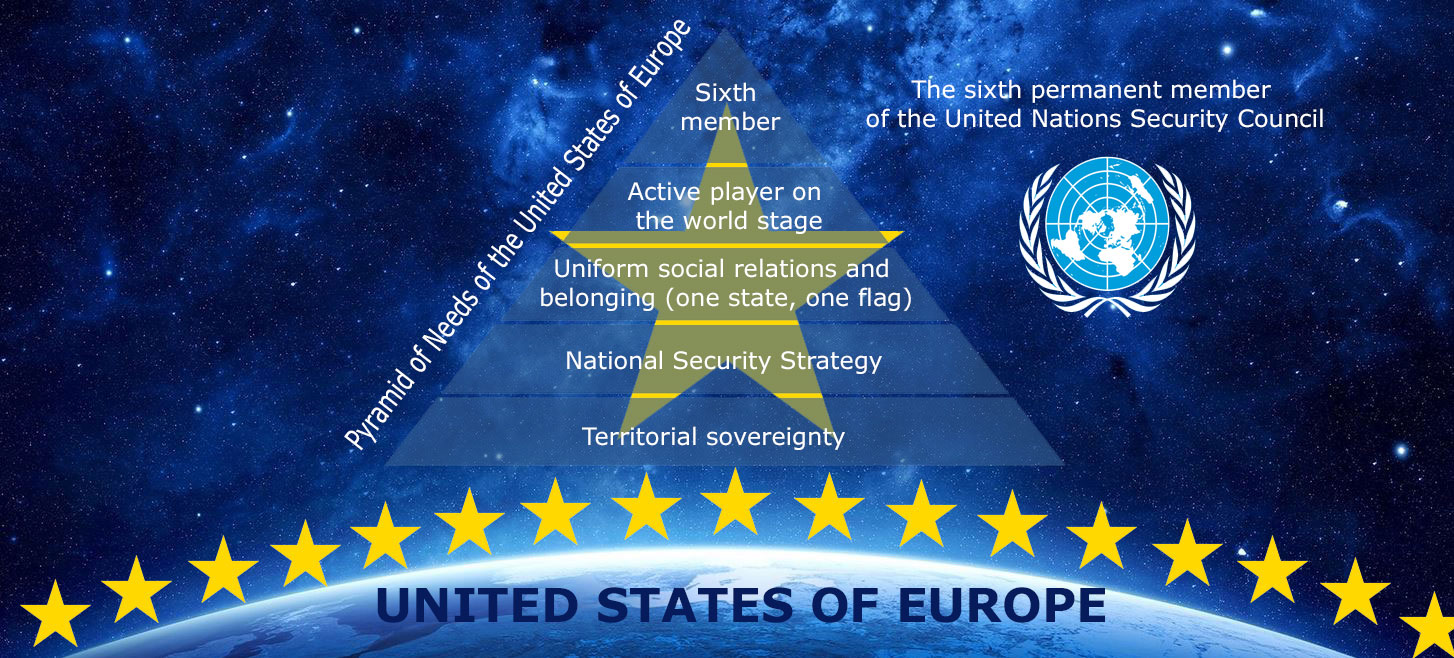
| Thomas Fränkle M. Sc. / doctoral candidate | EMERGENCY EXIT! THE ROADMAP TO THE "UNITED STATES OF EUROPE 2030" (SCIENTIFIC PUBLICATION / planned/scheduled / 02/2026) | Non-Experimental Research; Case Studies; Grounded Theory | Content Analysis; Literature and Document Analysis | Cross-Sectional Design; Case Study Design; Mixed-Methods Design | |||||||||||||||||||||||||
| Thomas Fränkle M. Sc. / doctoral candidate | DIPLOMATIC AND SECURITY STRATEGIC PRESSURE FROM THE US ERODES EUROPE´S LEGITIMACY (SCIENTIFIC PUBLICATION / planned/scheduled / 01/2026) | Non-Experimental Research; Grounded Theory | Content Analysis; Literature and Document Analysis | Cross-Sectional Design; Case Study Design; Mixed-Methods Design | |||||||||||||||||||||||||
| Thomas Fränkle M. Sc. / doctoral candidate | HUNTED BY AI! EUROPE'S LEADERSHIP - WITHOUT A SECURITY STRATEGY AND NO FLAG (SCIENTIFIC PUBLICATION 11/2025) |
Non-Experimental Research; Grounded Theory | Content Analysis; Literature and Document Analysis | Cross-Sectional Design; Case Study Design; Mixed-Methods Design | |||||||||||||||||||||||||
| Thomas Fränkle M. Sc. / doctoral candidate | HOW DIGITIZATION IS CHANGING THE COMBAT READINESS AND COMMAND AND CONTROLL CAPABILITIES OF THE GERMAN ARMEE FORCES AND NATO´S SPEARHEAD IN EUROPE. DIGITAL MILITARY STRATEGIES IN THE 21ST CENTURY (MASTER-THESIS 04/2021) | Qualitative Research; Quantitative Research; Mixed Methods; Grounded Theory; Non-Experimental Research | Interviews, focus groups, case studies; Surveys, experiments, statistical analysis; Observations, surveys, correlational analyses | Correlational Design; Mixed-Methods Design | |||||||||||||||||||||||||
 |
 |
 |
 |
| Methodology (EN) | Objective | Methods | Example |
|---|---|---|---|
| Qualitative Research | In-depth understanding of phenomena and contexts | Interviews, focus groups, case studies | Investigating behavioral patterns or social interactions |
| Quantitative Research | Measuring and quantifying phenomena | Surveys, experiments, statistical analysis | Collecting data on customer preferences through surveys |
| Mixed Methods | Combining qualitative and quantitative approaches | Integrating interviews and surveys | Study combining quantitative survey results and qualitative interviews |
| Experimental Research | Examining cause-and-effect relationships | Controlled experiments, randomization | Testing the effectiveness of a medication in a clinical trial |
| Non-Experimental Research | Observations without intervening in the variables under study | Observations, surveys, correlational analyses | Examining the relationship between job satisfaction and productivity |
| Case Studies | Detailed investigation of a single case or a small group | In-depth interviews, observations, document analysis | Examining a company with a successful marketing campaign |
| Grounded Theory | Developing theories from collected data without preconceived hypotheses | Qualitative data collection (interviews, observations), constant comparison | Developing a theory of customer retention based on interviews |
| Phenomenological Research | Investigating personal experiences and perceptions | In-depth interviews, reflections | Analyzing patients’ experiences with a specific illness |
| Ethnographic Research | Studying cultures, groups, or social contexts | Field observations, interviews | Researching the behavior of a particular community or subculture |
| Action Research | Changing or improving practical problems through research | Cyclical processes of planning, action, observation, and reflection | School programs to improve student performance |
 |
 |
 |
| Methods (EN) | Goal | Types | Example |
|---|---|---|---|
| Interviews | Gain detailed insights into opinions and experiences | Structured, semi-structured, unstructured interviews | In-depth interview with an expert in a field |
| Surveys | Collect large amounts of data on specific topics | Online surveys, paper surveys, telephone surveys | Customer satisfaction survey |
| Observations | Analyze behavior or events in their natural context | Participant or non-participant observation | Observation of student behavior in a classroom |
| Experiments | Test cause-and-effect relationships under controlled conditions | Laboratory and field experiments | Testing the effects of advertising on consumer behavior |
| Case Studies | In-depth analysis of a single case or small group | Single or multiple case studies | Case study of a company undergoing an innovation process |
| Secondary Research (Desk Research) | Use existing data and sources for research | Literature review, analysis of existing datasets | Analysis of market research reports |
| Content Analysis | Systematic analysis of texts or media content | Qualitative and quantitative content analysis | Analysis of newspaper articles to study political representation |
| Field Research | Collect data in real-world, uncontrolled environments | Direct observation, on-site interviews | Ethnographic research in an indigenous community |
| Delphi Method | Achieve consensus through expert opinions on a topic | Anonymous surveys with multiple rounds | Consensus on future technological trends |
| Literature and Document Analysis | Systematic review of existing texts or documents | Analysis of academic papers, reports, archives | Study of legal texts for legal development |
 |
| Research Design (EN) | Goal | Methods | Example |
|---|---|---|---|
| Exploratory Design | Discover new phenomena or understand unexplored topics | Qualitative methods (interviews, focus groups) | Initial investigation of a new market |
| Descriptive Design | Describe phenomena or relationships in detail | Surveys, observations | Survey on customer satisfaction |
| Causal Design | Identify cause-and-effect relationships | Experimental studies, control groups | Testing the effectiveness of a new drug |
| Correlational Design | Study relationships between variables without proving causality | Statistical analyses (e.g., Pearson correlation) | Investigating the relationship between sleep and performance |
| Quasi-Experimental Design | Study cause-and-effect relationships without random assignment | Field experiments, natural experiments | Study of educational programs in schools without random assignment |
| Longitudinal Design | Track changes over a long period of time | Repeated measurements in the same group | Long-term study of behavior development |
| Cross-Sectional Design | Study phenomena at a specific point in time | One-time data collection at a point in time | Survey on a particular topic at a given time |
| Case Study Design | In-depth study of a single case or small group | Qualitative analysis, interviews, documentation | Case study of a company with a successful marketing campaign |
| Experimental Design | Identify causes and effects through controlled experiments | Randomized control groups, variable manipulation | Testing a new product in a laboratory setting |
| Mixed-Methods Design | Combine qualitative and quantitative methods for broader insights | Integration of surveys, interviews, statistical analysis | A study combining quantitative survey results with qualitative interviews |